(Regular text is part of the example policy submission. The italicized text contains explanations that are not part of the policy submission example. This draft policy proposal is an example of the type of policy idea the contest is seeking. Time constraints prevent the development of a full contest submission. For example, the data analytics to support the cost efficacy of the policy is omitted and a diverse team did not develop this draft. Because this draft was developed by one person it will have flaws that the author is blind to. The full contest will include debates between competing teams where policy flaws will be identified and addressed in the subsequent round of the contest.
The policy contains many of the elements found in the judging criteria: It is relatively simple to implement. It gives a metric to assess the extent of the problem and a proposed metric for assessing efficacy. The policy has the potential to appeal to both Republicans and Democrats as it both addresses an important problem and has the potential to be cost-effective.
There is a link to a survey at the bottom of this page where you can provide feedback on this Policy Contest idea)
Preventive Care Health Insurance
Problem Definition With Metric
The image below shows life expectancy vs healthcare expenditures per person for the years 1970 to 2015. Unfortunately, the United States is the poorest performing country on this graph and it has been for several decades.
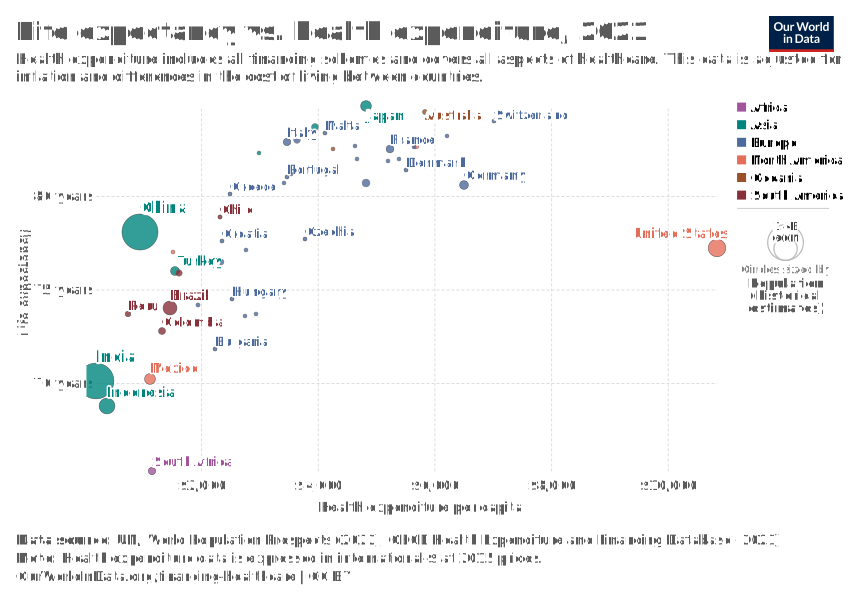
Source: Our World In Data May 2020 (https://ourworldindata.org/grapher/life-expectancy-vs-health-expenditure)
(This type of chart is an example of the type of anlytics desired to help clarify the importance of the problem)
This poor performance is not defensible, yet politicians constantly defend the status quo. Presumably this is because insurance companies are large donors to political campaigns and politicians feel obligated to defend the status quo.
The most common argument put forth against universal health care is that it is taking money out of the pockets of working americans and giving it to the poor. Upon examination this argument falls apart.
Root Cause Analysis
Countries with universal healthcare have a much lower expenditure per life expectancy attained.
(This needs data to back up the assertion.)
What is going on here is that not having coverage for the poor drives the cost of healthcare up. When the poor get sick, they do not stay home and die quietly. They stay home and hope they get better. If they don’t get better they go to the emergency room with a very advanced health issue that is much more expensive to treat. The hospitals are required to take them, and taxpayers end up footing a bill for this more expensive treatment.
(A full application would have an expanded section on root cause analysis that validates or invalidates the assertion that the cost of healthcare is driven up by a lack of preventive care.)
Proposal Summary
The policy calls for preventative healthcare services to be provided for all citizens. rivate insurers do not cover preventative care. It is paid for out of medicare taxes. Patients may opt out of the preventive care, but this will increase their medicare tax payments.
The preventative care covers things like dental checkups, annual physicals, substance abuse monitoring, well baby checkups, body mass measurements, dietary counselling, physical fitness assessment and mental health assessments. These medical services keep people healthy and reduce the number healthcare visits for significant problems. With fewer visits to healthcare providers, there will be lower demand for healthcare services. The laws of supply and demand implies the cost of reactive healthcare will be reduced.
Cost Efficacy Metrics
The preventive care includes physical and mental healthcare assessments. These measurements will be used to provide a health quality metric. The efficacy of the policy will be assessed by tracking the aggregate Health Quality across all patients, divided by the aggregate cost of health care across all patients.
Data Analytics To Support Cost Efficacy
(Data analytics are needed to support the assumption that preventive healthcare will reduce the total cost of health care.)
Simplicity of Implementation
This policy is relatively simple as healthcare policies goes. It supplies government funded preventive care. Only a small number of preventative care services are provided so there is not a need for complicated administrative system to track the multitude of indications and approved therapies.
The system is paid for by the existing medicare tax. There is some added complexity in that the medicare tax is adjusted based on whether or not individuals participate in the preventive care program. Those opting out pay a higher tax.
Appeal to both sides of the Aisle
Healthcare insurers should support this approach as it will reduce the amount of payments they have to make. This may reduce republican resistance to government sponsored health insurance. Democrats, may support this policy as it provides more affordable care to disadvantaged communities. Healthcare providers will likely resist the proposal at first because it can reduce their income. It is believed that there is a sufficient backlog of healthcare services that healthcare provider’s income will not be adversely impacted. Healthcare workers are also motivated to improve the public health and are likely to prioritize patients over profits.
Team Diversity
(A section explaining the diversity of political positions of the team that defined this policy is needed)
Feedback Survey
(Please provide feedback on this draft policy proposal in the survey link below. Completing the survey gives you a better idea of how the contest will work and how funds will flow to candidates supporting the contest)
 Meet In the Middle